The Day Everything Moved, and the Precinct Became Real
In September 2013, one of the largest health relocations in Australian history quietly unfolded on the Gold Coast, and in doing so, changed the future of healthcare, education and research in the region.
The move from the old Southport Hospital to the newly built Gold Coast University Hospital (GCUH) was more than an operational transfer. It was a once in a generation transformation that expanded clinical capability, strengthened education and research partnerships, and anchored what is now the Gold Coast Health and Knowledge Precinct (GCHKP) as a fully connected ecosystem.
It was ambitious. It was complex. And it worked, because of people.
A hospital relocation at full scale
Relocating a live hospital is one of the most complex exercises in healthcare operations. Every patient transfer must be timed. Every clinical risk managed. Every team coordinated.
On moving day, ambulances moved patients in carefully timed waves. Clinical teams travelled with them. Equipment, records and specialist units were transferred under tightly controlled conditions. Every detail was mapped, tested and rehearsed. 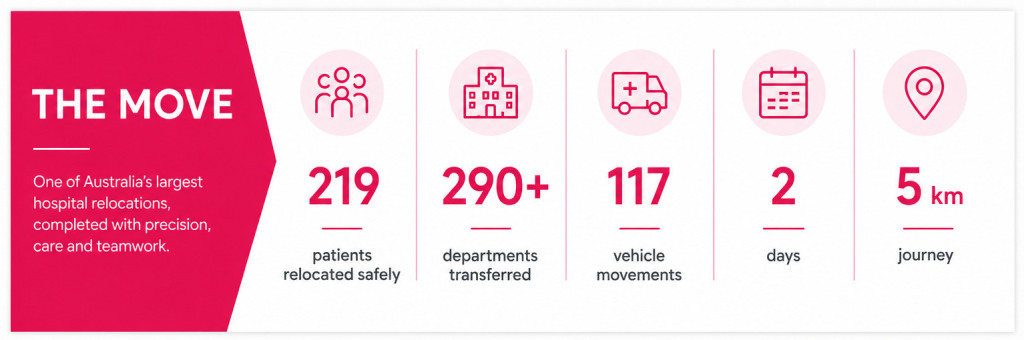
Staff trained for months. Scenarios were run. Contingency plans were built. The goal was simple and uncompromising. Safe, seamless patient care from first transfer to final arrival.
When the day came, the move unfolded with remarkable precision. Patients were welcomed into new wards. Teams stepped into new clinical environments. Services resumed without pause.
For many involved, it remains one of the proudest days of their professional lives.
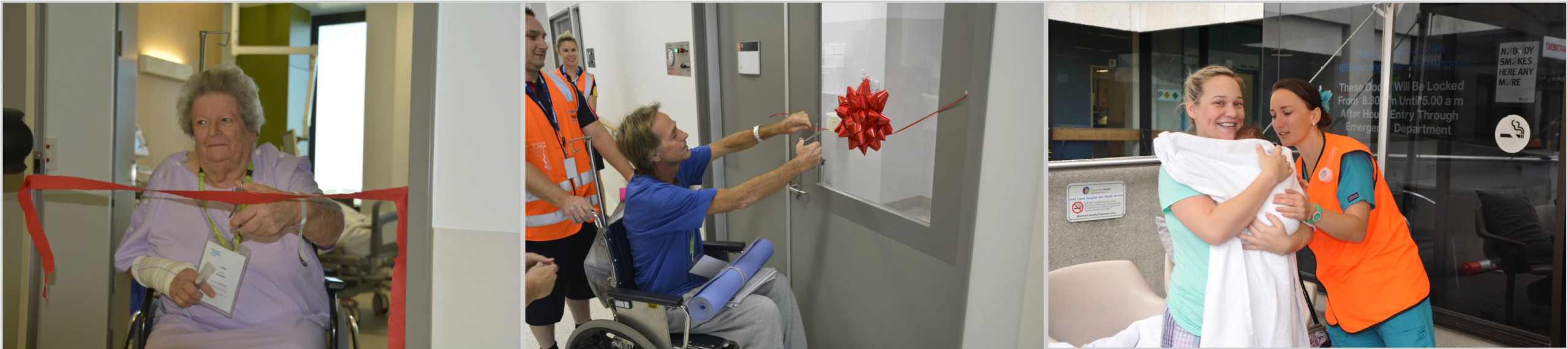
Some of the first patients to arrive at Gold Coast University Hospital officially opened their new rooms, marking the beginning of a new chapter in healthcare for the region.
A step change in capability
When Gold Coast University Hospital opened, it did not simply replace an older facility. It multiplied the region’s clinical capability.
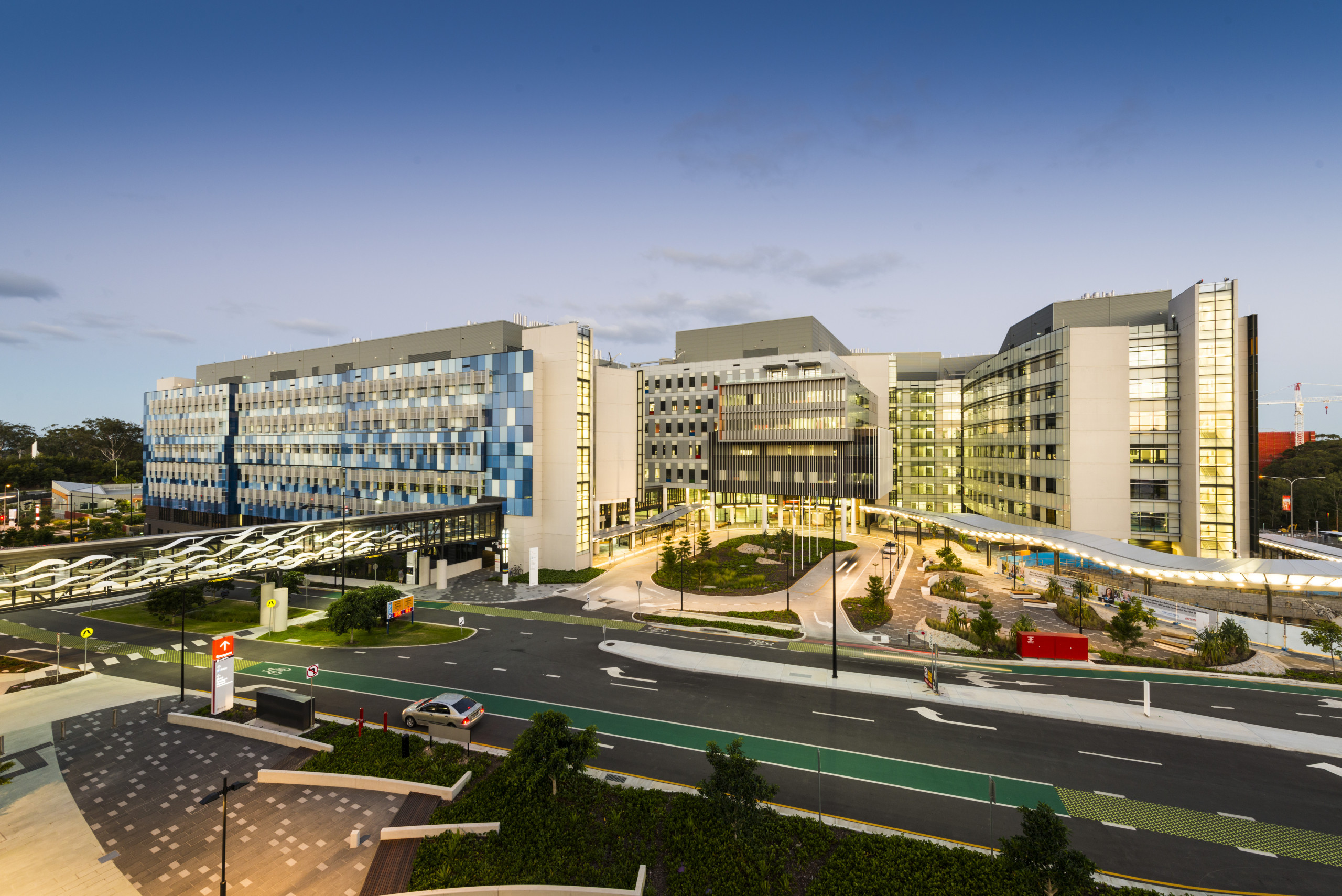
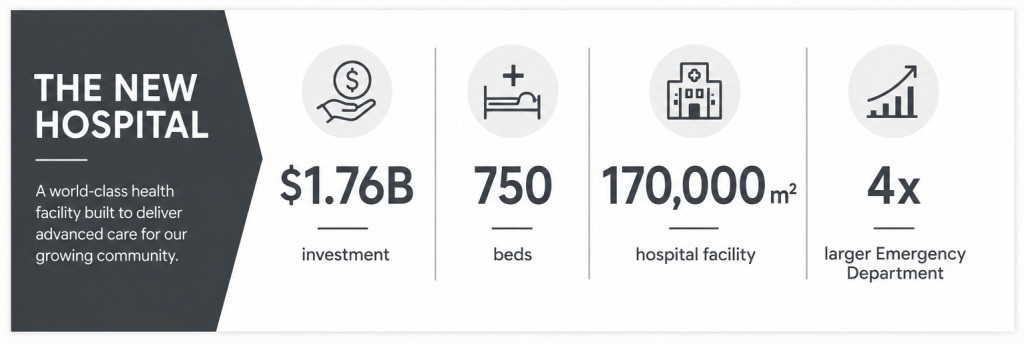
Built over four years at a cost of $1.76 billion, the new hospital opened as a 750-bed tertiary-level facility, more than three times larger than the previous hospital, and designed to deliver advanced, specialist care closer to home for Gold Coast and northern NSW communities.
It introduced and expanded services that previously required patients to travel to Brisbane, including higher level neonatal intensive care, complex maternal and fetal medicine, advanced neurovascular procedures, and expanded surgical and critical care capability.
For families, this meant fewer transfers away from support networks. For clinicians, it meant new tools, new facilities and new models of care. For the region, it marked a major leap forward in health sovereignty.
Stories from the early years reflect this impact. From premature babies treated locally in the Neonatal Intensive Care Unit, to high-risk pregnancies supported through specialist maternal fetal medicine services, to stroke and neurovascular patients accessing advanced intervention faster.
Professor Susan Moloney, Director of Paediatrics, says the true significance of the move has been measured not in the scale of the relocation, but in the lives changed ever since.
“While the move itself was monumental, the impact of the new services GCUH has brought to the Gold Coast are far greater.
The introduction of the Neonatal Intensive Care Unit, Children’s Critical Care Services and Children’s Emergency Department allows our multidisciplinary teams to care for sick babies and children from across the Gold Coast and northern NSW.
We’re now keeping critical care in our community and giving our most vulnerable young patients and their families the best possible care.”
Where health, learning and research came together
The hospital’s opening also fulfilled a long-held strategic vision: to co-locate major clinical services alongside university education and research.
Gold Coast University Hospital became Queensland’s first university-named hospital, strengthening formal ties with Griffith University and embedding clinical education and research into daily practice.
Students trained alongside experienced clinicians, while researchers worked closer to real patient needs. Clinical trials and translational research gained stronger pathways into practice, allowing new discoveries to move more efficiently from the laboratory to the bedside.
What had once existed as a vision on paper became a connected ecosystem in practice, where collaboration between healthcare, education and research became part of everyday operations rather than an aspiration for the future.
Innovation followed proximity
In the years following the move, the hospital rapidly became known for early adoption and innovation.
Advanced neurovascular technologies were introduced, with clinicians gaining global recognition for pioneering techniques in stroke and aneurysm treatment. New generation imaging technologies improved cancer and complex disease diagnosis. Hybrid operating theatres enabled more complex vascular and trauma procedures. A real-time coordination hub improved patient flow using live operational data.
Creative health programs, adolescent and young adult specialist services, and multidisciplinary care models expanded the definition of what hospital-based care could look like.
Each of these advances trace back to the same enabling condition; scale, infrastructure and partnership created by the move.
The moment the precinct connected
Looking back, the 2013 move is widely seen as the moment the precinct became more than a collection of institutions.
With hospital, university, research and training physically and operationally connected, the region gained a platform for long-term growth in clinical trials, precision health, advanced therapies and workforce development.
Infrastructure enabled partnership; partnership enabled progress; and progress enabled people to transform lives at scale.
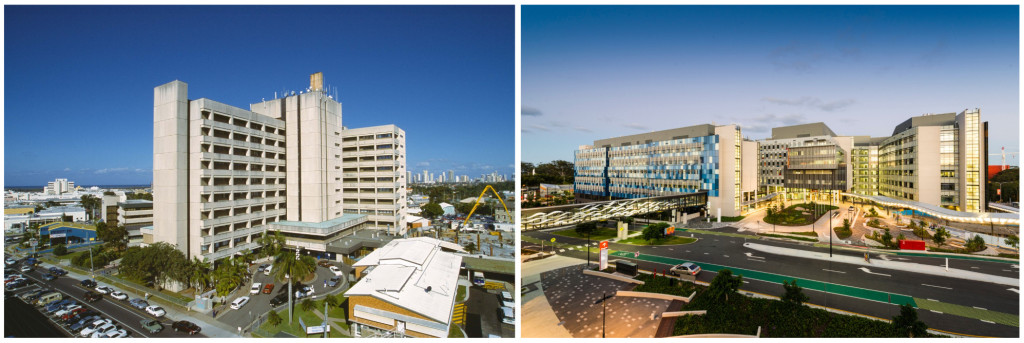
Just five kilometres apart, these two hospitals tell the story of a region transformed. The move to Gold Coast University Hospital in 2013 created new opportunities for patient care, research, education and innovation, helping shape the Gold Coast Health and Knowledge Precinct we know today.
The people who made it possible
Ask anyone who was there on moving day what they remember most, and it’s rarely the logistics. It’s the people.
Teams arrived early and stayed late. Clinicians, porters, administrators and executives worked side by side. Roles blurred, teamwork took over, and there was a shared sense that everyone was part of something bigger than their job title.
Many staff still describe the move as a defining moment in their careers. Not because it was complex, but because it was collective. A day built on trust, care and quiet leadership at every level.
The photos from that day show more than a hospital relocation. They show a community in action. Supporting each other, supporting patients, and stepping forward together.
It remains one of the most powerful examples of what happens when people come together to deliver care, support each other, and help a region step into its future.
Gold Coast Health Chief Executive Ron Calvert says the success of Gold Coast University Hospital is the result of years of planning and the dedication of thousands of people who helped bring the vision to life.
“The opening of Gold Coast University Hospital represented years of planning by clinicians, consultants, architects, engineers and countless specialist and support staff, all of whom played a key role in delivering the people of the Gold Coast a hospital they can truly be proud of.
Today, GCUH continues to be the home of innovation, research, and world-class care, delivering new and improved services to meet the growing and changing demands of our community.”
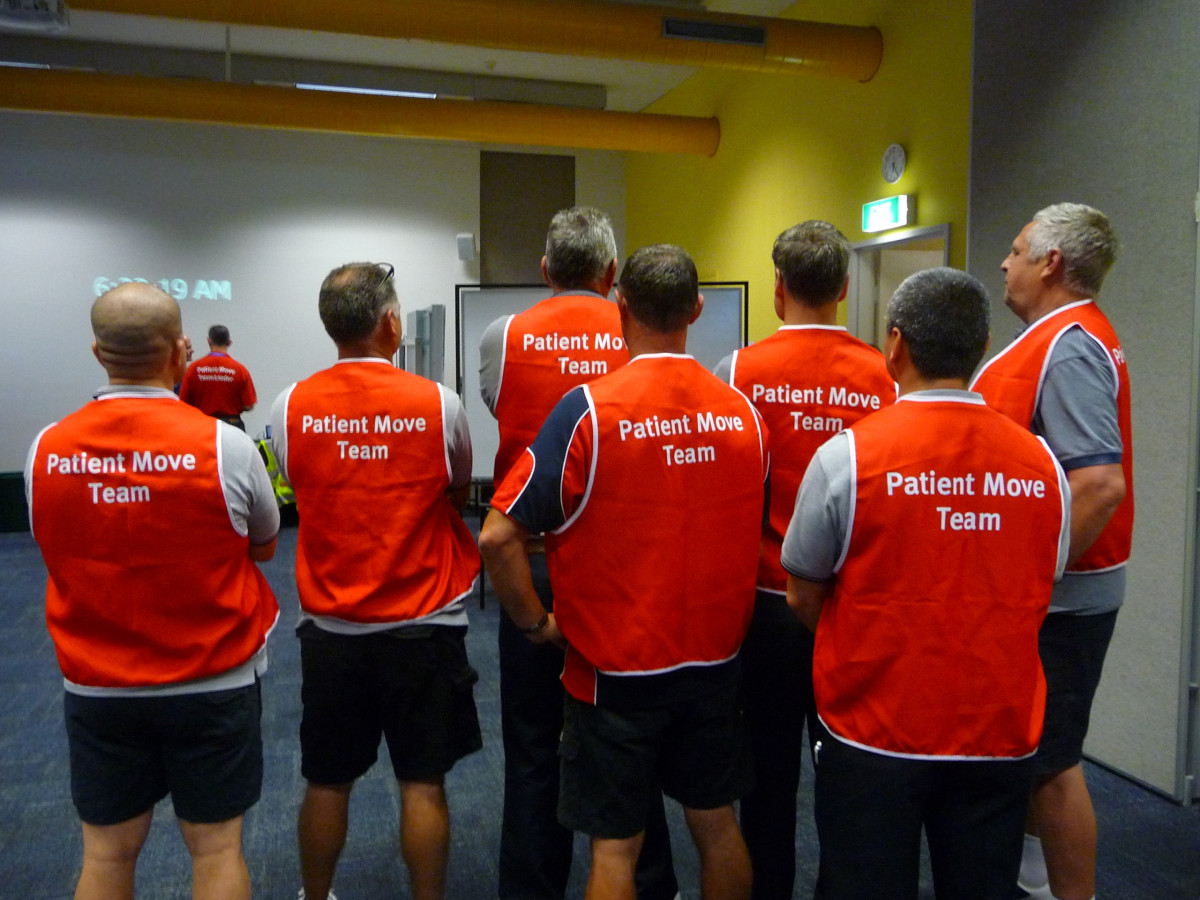
Months of planning culminated in moving day, with dedicated Patient Move Teams coordinating every transfer to ensure safe, seamless care.
A legacy still unfolding
Today, the impact of that 2013 move continues to be felt across the region.
The hospital has grown into one of Australia’s leading health services. Clinical education pathways have expanded. Research translation has accelerated. New infrastructure and specialist facilities continue to build on the foundation established at that moment of transition.
As part of the precinct’s 25th anniversary storytelling series, this moment stands as a powerful reminder that transformation is not only about vision and planning. It is about people showing up, working together, and delivering under pressure for the good of others.
Because behind every major milestone are teams of people quietly transforming lives.
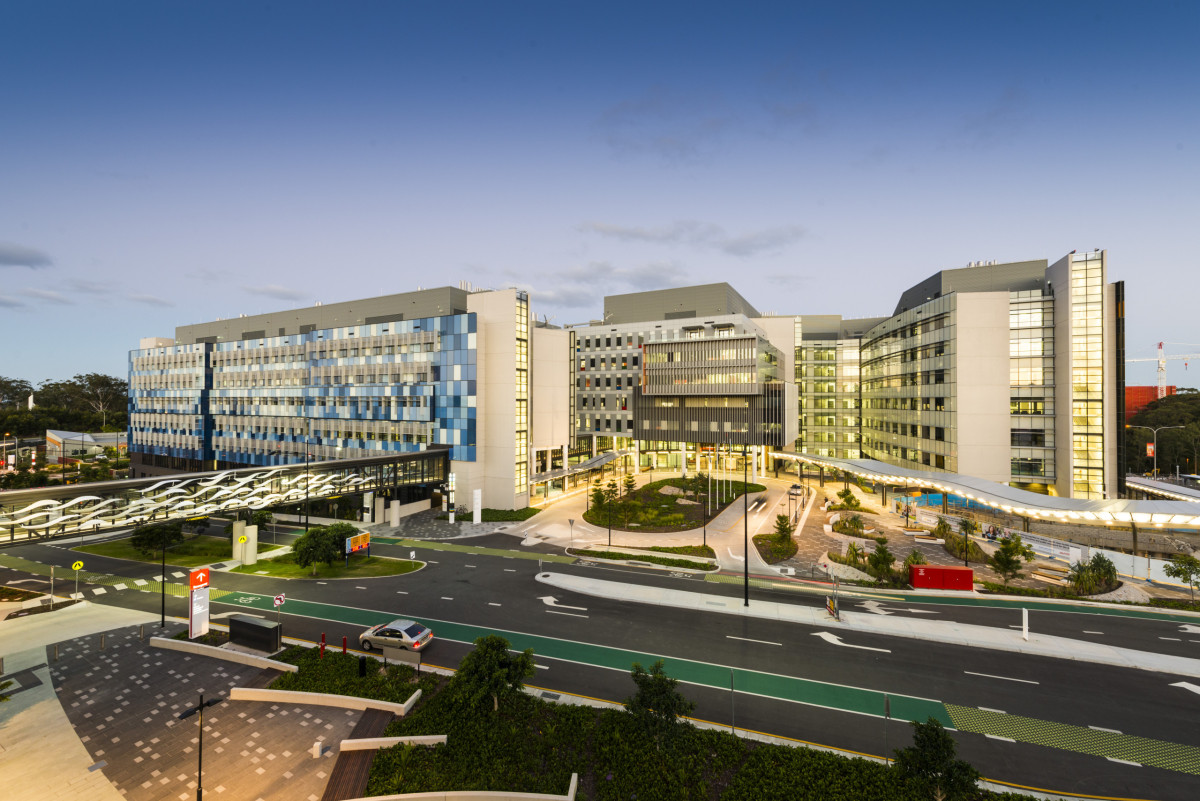
The opening of Gold Coast University Hospital in 2013 marked a defining moment for the Gold Coast, creating a world-class tertiary hospital that would anchor the Gold Coast Health and Knowledge Precinct for decades to come.