
Every medicine we rely on today was once an unanswered question. 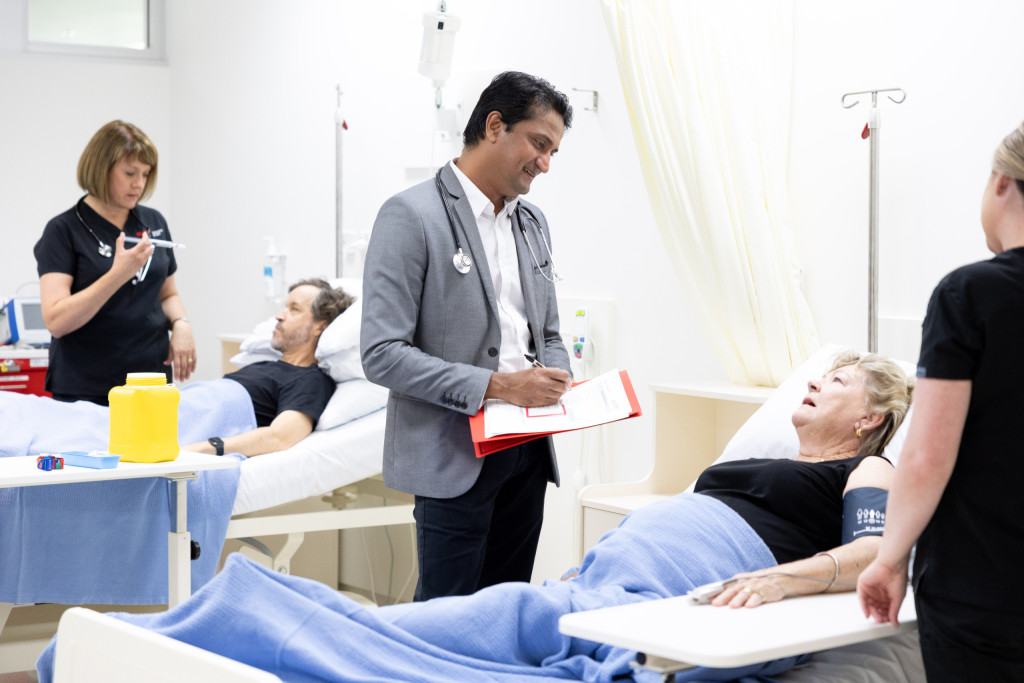
Could this treatment work? Is it safe? Could it improve someone’s life?
Clinical trials are where those questions begin to be answered, transforming scientific discovery into evidence and, ultimately, new treatment options for patients.
But behind every trial is a person.
Someone living with a condition that affects their everyday life. A volunteer willing to participate in research because it may help others. A researcher trying to answer a question that could change the way a disease or condition is treated.
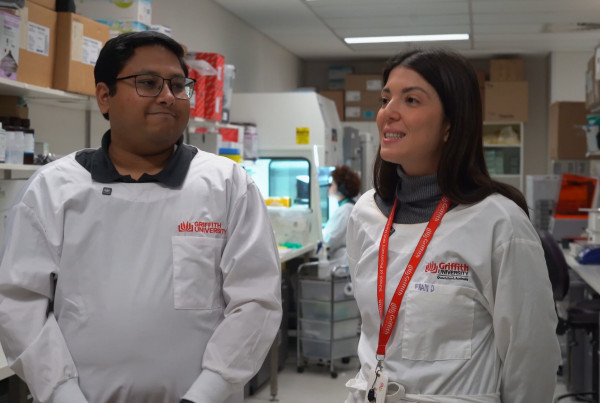
Based within the Gold Coast Health and Knowledge Precinct (GCHKP), the Griffith University Clinical Trial Unit (CTU) brings those worlds together.

Professor Evelin Tiralongo, Director of the Clinical Trial Unit at Griffith University.
Its story is also part of the precinct’s evolution over the past 25 years, as research, healthcare, education and industry have increasingly come together in one place. Established in 2015 as a Core Research Facility, under the leadership of its director and Registered pharmacist Professor Evelin Tiralongo, the CTU has grown into a globally recognised, community-centred clinical trial site.
Supported by an extensive network of specialists and general practitioners across public and private healthcare settings, the CTU conducts research across a broad range of therapeutic areas, involving both healthy volunteers and people living with chronic and rare diseases. Over the past decade, it has supported more than 50 academic translational research projects and delivered more than 100 clinical trials for commercial sponsors.
But the numbers only tell part of the story. The true impact of this research is reflected in the real-world outcomes it delivers, improving health, wellbeing and quality of life across our communities.
Research that could change lives
One example is the CTU’s involvement in the development of a world-first chlamydia vaccine. While chlamydia can often have no symptoms, the infection can cause irreversible reproductive damage and infertility in women. Following an observational study in which they enrolled more than 1,000 participants, the CTU is now supporting a Phase 1 trial of a potential vaccine.
CTU staff are also supporting a study that explores whether an existing medicine could be repurposed to offer a new treatment option to the millions of people living with Osteoarthritis.
By generating the evidence needed for regulatory approval, the research could provide access to an additional medicine for patients.
For one participant in the trial, the motivation is deeply personal.
“My life has been impacted by the fact that it hurts. It aches, just there. It’s something I live with, and to have a medicinal drug that might help my osteoarthritis is very special.”
Ramona, Clinical Trial Participant
This is one of several participant perspectives captured in the CTU’s video, which explores clinical research through the people delivering it and those choosing to take part.
Other CTU studies are exploring new possibilities for people living with conditions where treatment options remain limited.
The CTU is currently investigating a non-surgical treatment for Dupuytren’s Contracture, a progressive condition that causes the fingers to curl towards the palm and can significantly affect a person’s ability to perform everyday tasks. While surgery is often the only treatment option, participants in the trial have experienced rapid and often dramatic improvements in hand function following an injection-based treatment.
There are also examples of research conducted through the CTU contributing to medicines progressing through the TGA approval process and achieving PBS listing.
One is bimekizumab (Bimzelx®) for psoriatic arthritis, which is now available to eligible Australians through the PBS, expanding access to a treatment option for people living with this chronic condition.
Together, these studies demonstrate the many different paths clinical research can take, from investigating a potential vaccine or new treatment approach to generating the evidence that can ultimately help make treatments more widely available.
What comes next
After more than a decade of clinical research on the Gold Coast, the next chapter is already taking shape.
The CTU’s location within the GCHKP embeds it into close proximity with researchers, clinicians, healthcare providers and industry, supporting the collaboration needed to move research towards real-world application.
The CTU is now preparing for future expansion into the new Health and Advanced Technology Research and Innovation Centre (HATRIC) opening in mid-2028.
The new facility will significantly strengthen the CTU’s Phase I-IV clinical trial capabilities through short-term overnight stay facilities, a dedicated infusion suite and specialised laboratory infrastructure, creating capacity for more advanced and complex studies, including precision medicine, gene therapy and cell therapy trials.
Griffith University’s recent partnership announcement with Nucleus Network is one example of how that capability could continue to grow, with the collaboration exploring opportunities to strengthen early-phase clinical research, infrastructure and workforce development on the Gold Coast.
Together, these developments will expand clinical research capability on the Gold Coast and create more opportunities for the community to participate in trials and access emerging treatments closer to home.